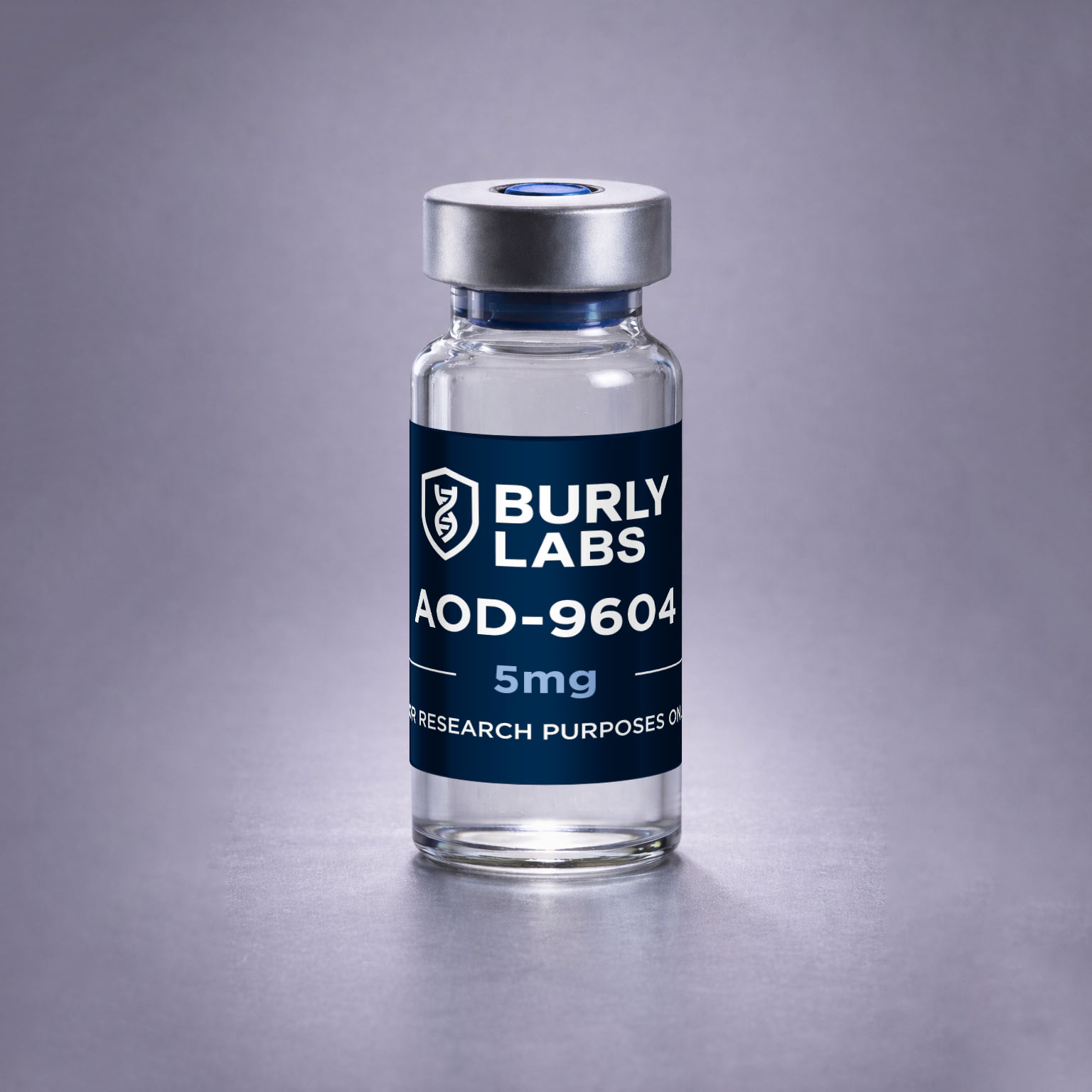
AOD 9604 is a synthetic peptide analog derived from a specific fragment of human growth hormone (hGH). It corresponds to amino acids 176–191 of the native growth hormone sequence and is commonly referred to in research literature as GH Fragment 176–191. To enhance molecular stability, the peptide includes a tyrosine substitution at the N-terminal position, a modification examined for its impact on resistance to enzymatic degradation.
In experimental research contexts, AOD 9604 has been studied as a functionally distinct fragment of growth hormone. Scientific investigations have demonstrated that different regions of the HGH molecule exhibit region-specific biological signaling properties. Within this framework, the 176–191 fragment has been examined for its association with lipid metabolism–related signaling pathways, distinct from other regions of the growth hormone sequence.
Research literature has characterized the N-terminal region of HGH as being associated with insulin-related signaling activity, while other segments—such as amino acids 108–129 have been studied for their involvement in cell proliferation and mitogenic signaling. In contrast, AOD 9604 has been evaluated for its role in lipolytic signaling mechanisms in controlled laboratory and in vitro models, independent of the broader endocrine effects of full length growth hormone.
AOD 9604 is supplied strictly for laboratory and in vitro research use only. This compound is not intended for human or animal consumption, clinical use, diagnostic application, or therapeutic purposes.
Overview
AOD 9604 was developed in the 1990s as part of research efforts to evaluate growth hormone derived peptide fragments with distinct signaling properties. Subsequent laboratory studies have examined this fragment for its association with lipid metabolism related signaling pathways, particularly those involved in lipolysis under controlled experimental conditions.
Lipolysis is the biochemical process by which stored triglycerides within adipocytes are hydrolyzed into glycerol and free fatty acids, mediated by lipase enzymes. In experimental models, AOD 9604 has been investigated for its potential interaction with adipocyte signaling mechanisms and lipolytic sensitivity, including studies assessing changes in receptor expression and enzymatic activity.
Research literature has explored whether AOD 9604 may influence pathways associated with adrenergic signaling, including examination of adrenergic receptor (AR) expression in adipose tissue models. Experimental findings have reported altered AR RNA expression in the presence of AOD 9604, suggesting a potential role in modulating receptor sensitivity rather than direct receptor agonism. These observations indicate a complex and indirect relationship between the peptide and lipolytic signaling cascades.
Additional studies have evaluated whether the modified region of human growth hormone represented in AOD 9604 may engage lipid metabolism pathways without activating insulin like growth factor-1 (IGF-1) related signaling, distinguishing its experimental profile from that of full length growth hormone. These investigations contribute to ongoing research into region-specific hormone fragment activity and metabolic signaling regulation.
AOD 9604 is supplied strictly for research use only and is not intended for human or animal consumption, clinical application, diagnostic use, or therapeutic purposes.