Between the 1940s and 1950s, early research into growth hormone (somatotropin) identified circulating factors associated with enhanced sulfate uptake in experimental models. These observations led researchers to propose the existence of intermediary serum components responsible for mediating growth hormone related effects. Subsequent isolation of these factors resulted in the designation “somatomedins.” Parallel investigations into substances producing insulin like biological activity suggested overlap with these same mediators, ultimately leading to the term insulin like growth factors (IGFs).
Further research into IGFs focused on structural modification strategies aimed at evaluating bioavailability, receptor interaction, and signaling behavior in experimental systems. One such variant developed through these efforts was IGF-1 LR3, a modified form of insulin like growth factor engineered through amino acid substitution and sequence extension.
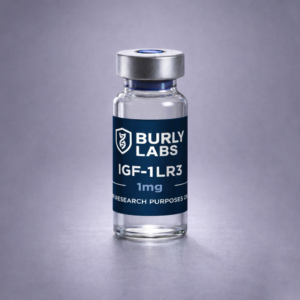
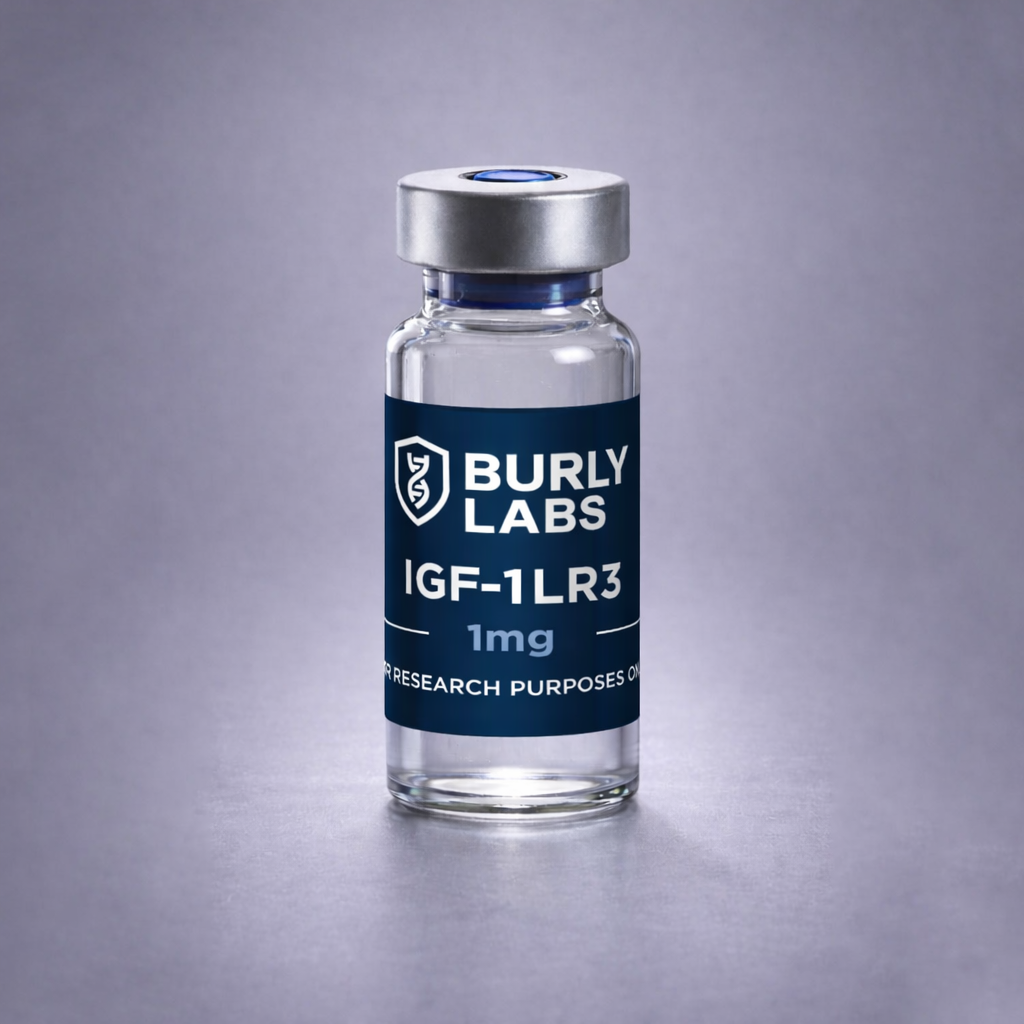
IGF-1 LR3, also referred to as Long Arg IGF-1, is a synthetic polypeptide consisting of 83 amino acids, compared to the 70-aminovacid sequence of endogenous IGF-1. This variant incorporates an arginine substitution at position 3 and an extended N terminal sequence, structural changes designed to alter interaction dynamics within experimental research models.
In laboratory studies, IGF-1 LR3 has been evaluated for its receptor binding characteristics and cell signaling behavior, particularly in comparison to native IGF-1 and recombinant IGF-1 (rhIGF-1). Research literature examines whether these structural modifications influence interactions with IGF-binding proteins (IGFBPs), receptor engagement, and persistence within experimental environments. These properties make IGF-1 LR3 a compound of interest in cell growth and developmental signaling research.
Due to its altered molecular structure, IGF-1 LR3 is studied for differences in binding affinity, signaling duration, and protein interaction profiles within controlled laboratory systems.
Overview
IGF proteins appear to exert potential via binding with IGF-1 receptors; however, researchers posit that these IGF binding proteins, including Receptor Grade IGF-1 LR3, may function either via IGF receptor dependent mechanism or via IGF independent mechanisms.
A study was conducted where a murine model was exposed to the endogenous IGF-1 with IGF-1 LR3. During this study, it was suggested that upon exposure, the synthetic protein exhibited the potential to quickly clear the serum and distribute into tissues. Increased concentrations of the IGF-1 LR3 tracer were apparently detected in specific organs, including the kidneys, ovaries, and adrenal glands, in mouse models. This distribution pattern indicates that organs critical to metabolism and reproductive processes might have differing abilities to absorb or retain IGF-1 LR3 compared to IGF-I. It is proposed that these variations might arise due to IGF-1 LR3’s reduced tendency to bind with IGFBPs. IGFBPs are proteins that regulate the availability of IGFs in circulation, influencing their interaction with various tissues. The decreased binding of IGF-1 LR3 to IGFBPs may affect its bioavailability and interactions with specific tissues in research settings. Researchers suggest Receptor Grade IGF-1 LR3 has the potential to induce a signaling mechanism in the organism, either via autocrine mode (where the tissue cell stimulates itself) or via paracrine mode (where the tissue cell stimulates the nearby cell). The increased potential bioavailability of these autocrine and paracrine IGF-1 LR3 proteins may prove vital to inducing any possible action.
IGF-1 LR3 is supplied strictly for research use only. This compound is not intended for human or animal consumption, clinical use, diagnostic application, or therapeutic purposes.