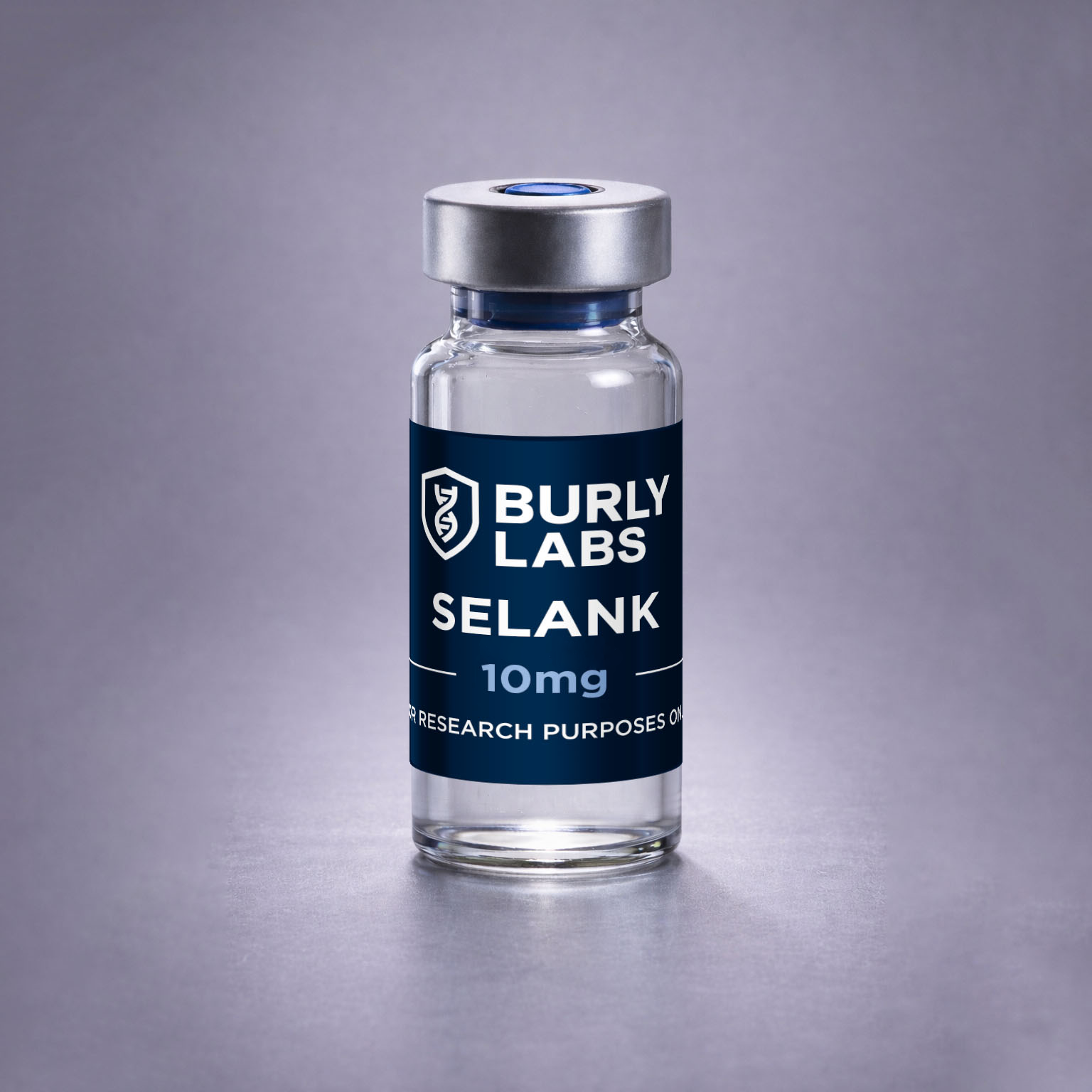
Selank is a synthetic heptapeptide composed of seven amino acids and developed as a structural analog of Tuftsin, a naturally occurring tetrapeptide fragment derived from immunoglobulin G (IgG). Tuftsin has been studied in scientific literature for its involvement in immune system related signaling pathways, particularly those associated with phagocytic cell activity.
Following the identification and isolation of Tuftsin, researchers investigated its relevance to phagocytic cell functions, including processes related to cell motility, phagocytosis, and broader immunological signaling mechanisms in experimental models. Due to the short half life and limited stability of naturally occurring peptides, synthetic analogs were subsequently developed to allow for more controlled investigation.
Selank represents one such synthetically engineered analog, produced using conventional laboratory synthesis techniques to support research into immune modulation, cellular communication, and peptide based signaling pathways. Its structure allows researchers to examine Tuftsin related biological mechanisms within controlled experimental and in vitro environments.
Selank is supplied strictly for laboratory and in vitro research use only. This compound is not intended for human or animal consumption, clinical application, diagnostic use, or therapeutic purposes.
Overview
Selank is a synthetic peptide composed of two structural components: a Tuftsin derived sequence at the N-terminal and a Pro–Gly–Pro (PGP) tripeptide motif at the C-terminal end. This molecular design has been developed to support experimental research into peptide stability, transport characteristics, and signaling behavior.
In laboratory research contexts, the inclusion of the PGP sequence has been examined for its potential influence on peptide physicochemical properties, including hydrophilicity, lipophilicity, and structural conformation. These properties are relevant in experimental models evaluating peptide interaction with selective biological barriers, such as blood brain barrier (BBB) analog systems.
Scientific studies have explored whether the PGP motif may alter Selank’s interaction with cellular membranes, transport associated proteins, or receptor mediated pathways in controlled experimental environments. Researchers also investigate whether structural changes introduced by the PGP sequence may influence the peptide’s three dimensional configuration, potentially affecting its interaction with barrier associated cellular components.
These characteristics make Selank a compound of interest in laboratory studies focused on peptide transport mechanisms, barrier permeability models, and structure function relationships under controlled research conditions.
Selank is supplied strictly for research use only and is not intended for human or animal consumption, clinical application, diagnostic use, or therapeutic purposes.