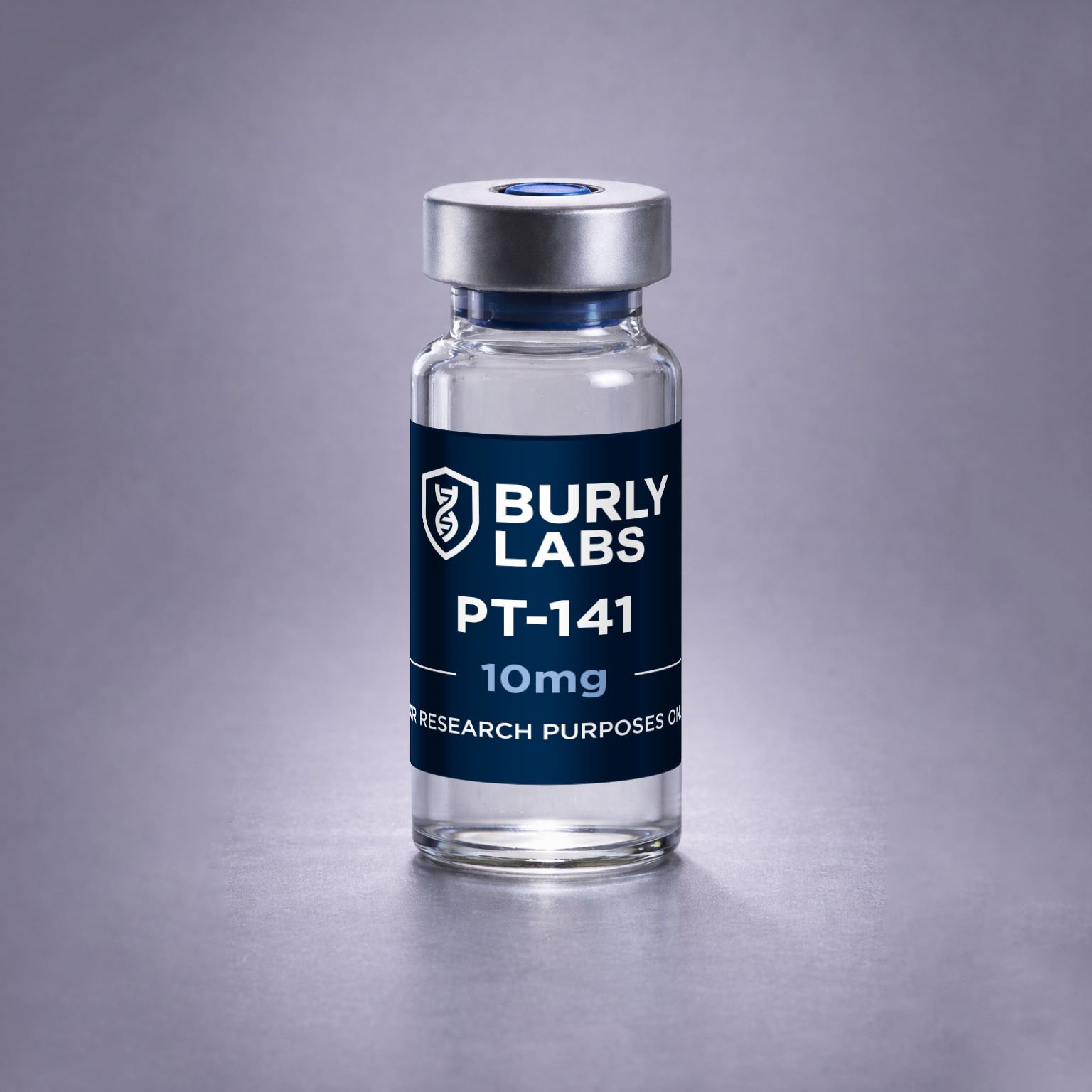
PT-141, also known as Bremelanotide, is a cyclic synthetic heptapeptide composed of seven amino acids. It is structurally related to melanocortin signaling peptides and has been studied in laboratory research for its interaction with melanocortin receptor pathways, similar to those engaged by the endogenous hormone alpha melanocyte stimulating hormone (a-MSH).
PT-141 was originally identified as a metabolic derivative of Melanotan II, another synthetic melanocortin analog. Research into melanocortin hormones has examined their involvement in a wide range of physiological signaling processes, including central nervous system mediated pathways and neuroendocrine communication.
In experimental research models, PT-141 has been investigated primarily for its role in melanocortin receptor activation, with particular focus on reproductive and behavioral signaling mechanisms under controlled laboratory conditions. These studies contribute to a broader understanding of melanocortin system function and receptor specific peptide interactions.
PT-141 is supplied strictly for laboratory and in vitro research use only. This compound is not intended for human or animal consumption, clinical application, diagnostic use, or therapeutic purposes.
Overview
Scientific studies have investigated PT-141 for its interaction with melanocortin receptors, particularly MC3R and MC4R, within controlled laboratory and experimental research models. These receptors are primarily expressed in the central nervous system, including regions of the hypothalamus, and are studied for their role in neuroendocrine and metabolic signaling pathways.
MC3R has been examined for its involvement in energy homeostasis, with research suggesting it may modulate signaling activity of other melanocortin receptors within hypothalamic networks. Experimental models have explored its association with feeding behavior, metabolic regulation, and pathways related to glucose and lipid signaling.
MC4R is widely studied in laboratory research for its role in appetite regulation and energy balance. Activation of MC4R in experimental settings has been examined for its influence on energy expenditure pathways and broader neuroendocrine signaling mechanisms. Additional studies have explored its association with reproductive and behavioral signaling circuits within the central nervous system.
In experimental models, binding of PT-141 to MC3R and MC4R has been associated with neuronal activation within hypothalamic regions, as observed through immunoreactivity markers in laboratory studies. Research has also examined downstream signaling effects in adjacent neural regions as part of broader investigations into melanocortin mediated neuronal communication.
PT-141 is supplied strictly for research use only and is not intended for human or animal consumption, clinical application, diagnostic use, or therapeutic purposes.