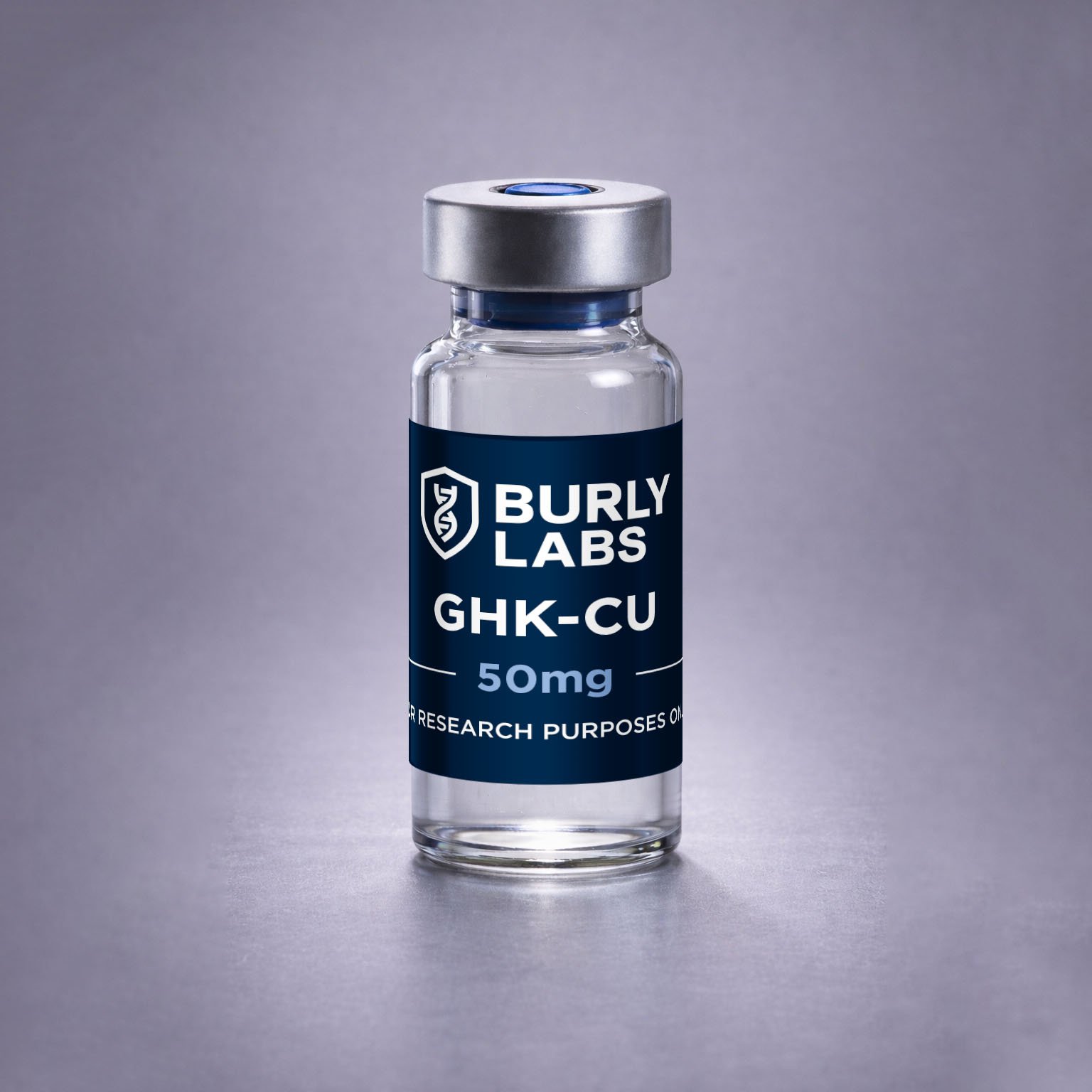
GHK-Cu is a naturally occurring copper binding tripeptide composed of the amino acid sequence glycyl-L-histidyl-L-lysine (GHK) complexed with a copper(II) ion. The “Cu” designation refers specifically to the chemical coordination of copper to the peptide backbone.
In biological research literature, GHK-Cu has been identified in human plasma and has been observed to appear at sites of tissue disruption in experimental models. Reported plasma concentrations of GHK-Cu are observed to decline with age, with studies noting average levels decreasing from approximately 200 ng/mL in early adulthood to ~80 ng/mL by later decades.
In vitro studies have examined the effects of GHK peptides in nanomolar concentrations within cell culture systems, where researchers have reported a broad range of cellular responses depending on experimental conditions. During isolation and characterization, GHK has demonstrated metal chelating properties, with researchers observing its ability to bind copper ions and, to a lesser extent, iron.
Experimental models investigating GHK complexed with copper and iron have explored its role in cellular signaling, metal peptide interactions, and redox related biochemical pathways. These properties make GHK-Cu a compound of interest in laboratory research focused on extracellular matrix regulation, cellular response modulation, and peptide metal complex behavior.
GHK-Cu is supplied strictly for laboratory and in vitro research use only. This compound is not intended for human or animal consumption, clinical application, diagnostic use, or therapeutic purposes.
Overview
Research studies have investigated GHK-Cu for its interaction with gene expression pathways and its potential role in cellular signaling mechanisms associated with genomic regulation in experimental models. Within controlled laboratory environments, researchers have examined GHK-Cu’s relevance to cellular restoration processes, including studies involving impaired or stressed cell models.
Scientific literature has explored GHK-Cu across a broad range of experimental research contexts, including its interaction with extracellular matrix components, skin barrier structure models, and inflammatory signaling pathways. Additional research has examined its association with tissue repair mechanisms, oxidative balance, and cellular aging related pathways.
GHK-Cu has also been evaluated in laboratory studies involving hair follicle cell models, pigmentation pathways, and lesion related cellular responses, as well as for its role in antioxidant activity and peptide metal mediated gene regulation mechanisms. These combined research areas make GHK-Cu a compound of interest in experimental studies focused on cellular communication, structural integrity, and biochemical signaling dynamics.
GHK-Cu is supplied strictly for research use only. This compound is not intended for human or animal consumption, clinical use, diagnostic application, or therapeutic purposes.